
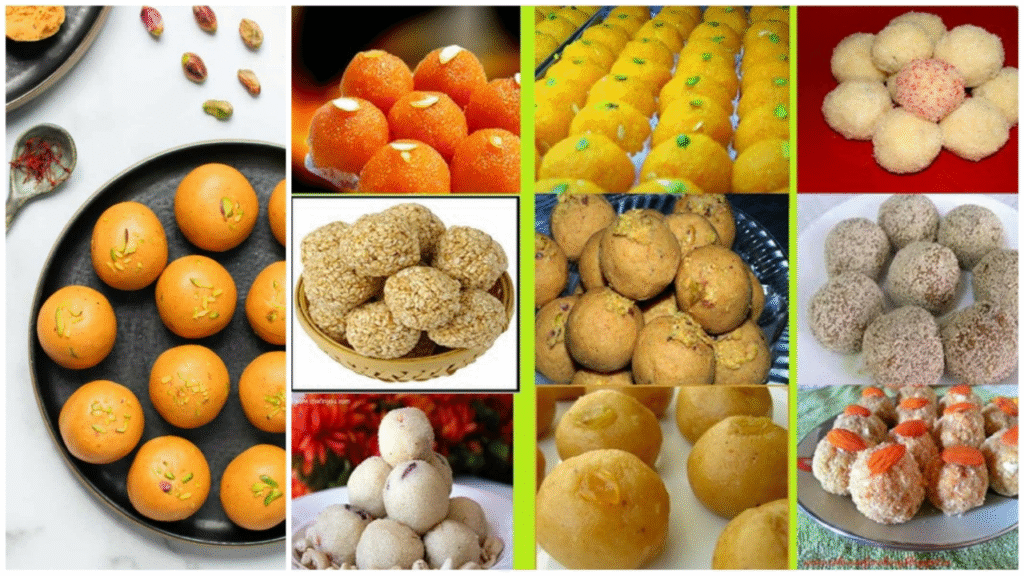
The scent of Ganesh Chaturthi is unmistakable. Long before the idol is seated upon its pedestal, Indian kitchens undergo a complete transformation. Heavy brass kadhais warm on low flames, green cardamom pods are freshly crushed in mortars, and the rich, nutty fragrance Delicious Laddus of slow-roasting chickpea flour fills the air.
While the ukadiche modak—the steamed rice-flour dumpling filled with coconut and jaggery—is widely celebrated as Ganesha’s favorite offering (naivedya), laddus hold an equally cherished place on the festive table. In traditional iconography, Lord Ganesha is almost always depicted holding a golden sweet in his hand. Beyond spiritual tradition, laddus are a practical festive staple: they are simple to shape together as a family, store well without complex refrigeration, and travel easily when sharing blessings with neighbors.
Regional & Traditional Laddu Varieties
Indian confectionery treats the laddu not as a single recipe, but as a culinary technique: binding roasted grains, legumes, seeds, or nuts with fat (usually cow ghee) and a natural sweetener like jaggery, unrefined sugar, or sugar syrup.
- Besan Laddu (Coarse Gram Flour & Desi Ghee): The quintessential festive sweet. Using coarse, sandy gram flour (laddoo besan) is key. Slow-roasting it in pure ghee over low heat for 25 to 30 minutes develops its signature golden-amber color and nutty flavor. Kitchen Tip: Splash a single tablespoon of cold water into the hot pan right as the flour finishes roasting; the steam causes the granules to swell instantly, creating a delightful danedaar (grainy) texture.
- Motichoor Laddu (Boondi Pearls in Saffron Syrup): Famous for its soft, melt-in-your-mouth feel. A thin chickpea batter is passed through a fine perforated spoon directly into warm ghee to form miniature droplets (boondi), which are then soaked in warm, saffron-infused single-string sugar syrup before being rolled into spheres with melon seeds.
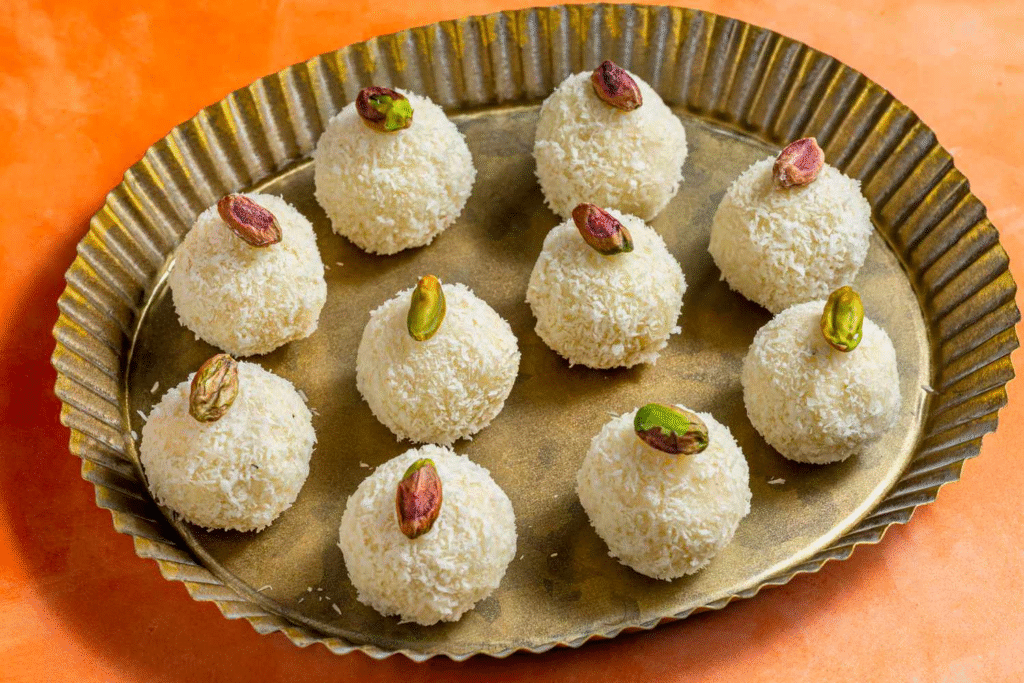
- Coconut Laddu (Fresh Coconut & Jaggery): Essential across coastal Maharashtra, Goa, Karnataka, and Tamil Nadu. Freshly grated white coconut is gently sautéed in ghee to draw off excess moisture, then cooked down with organic jaggery or condensed milk. A pinch of freshly grated nutmeg cuts through the rich oils of the coconut and ghee.
- Rava Laddu (Roasted Semolina with Cashews): A quick South Indian favorite. Fine semolina (chiroti rava) is dry-roasted in ghee until aromatic without browning, then bound with powdered sugar, warm ghee, and ghee-fried cashews and raisins.
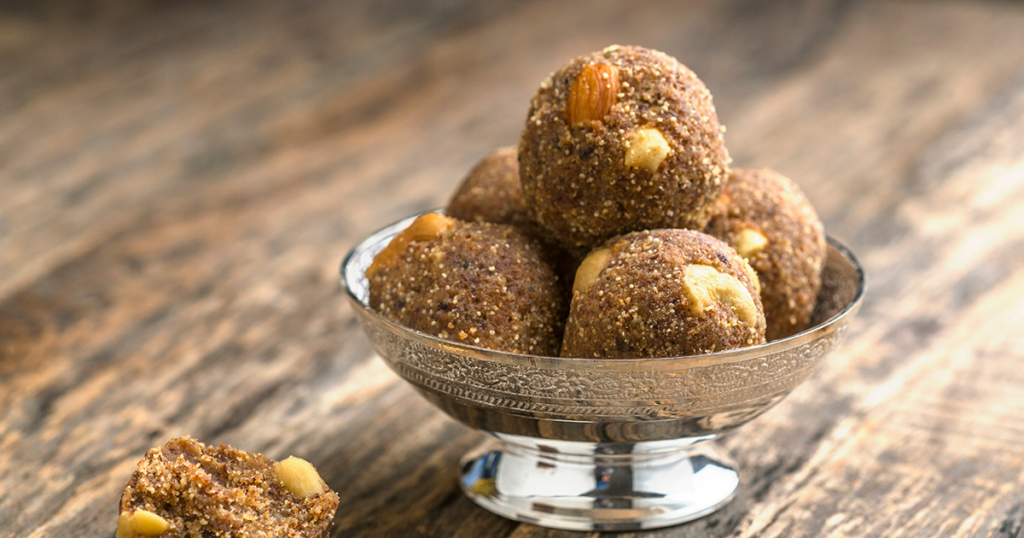
- Til-Gul Laddu (Toasted Sesame & Jaggery): A nutrient-dense sweet deeply tied to Maharashtrian tradition. White sesame seeds are dry-toasted until they crackle, then folded into melted unrefined jaggery cooked to a soft, pliable consistency.
- Dry Fruit & Date Laddu (Naturally Sweet & Sugar-Free): Soft, pitted Medjool dates are warmed in a pan with a touch of ghee until they form a smooth paste, then mixed with dry-roasted almonds, walnuts, pistachios, and poppy seeds.
- Peanut-Jaggery Laddu (Shengdana Laddu): A rustic sweet popular across rural Maharashtra, Gujarat, and Andhra Pradesh. Raw peanuts are roasted, deskinned, and coarsely pulsed with dark jaggery. A small pinch of salt balances the sweetness and highlights the roasted nut oils.
- Gond Laddu (Edible Gum & Spiced Wheat): Hailing from Rajasthan and Northern India, these feature edible tree gum (gond) fried in low-temperature ghee until it expands into airy, white balls. These are crushed and mixed with roasted whole wheat flour, ginger powder, and jaggery.
- Atta Laddu (Whole Wheat Comfort): A classic home-style sweet made in large batches across North Indian households. Coarse whole wheat flour (chakki atta) is slow-roasted in pure ghee until dark golden brown, then cooled completely before stirring in powdered sugar or boora.
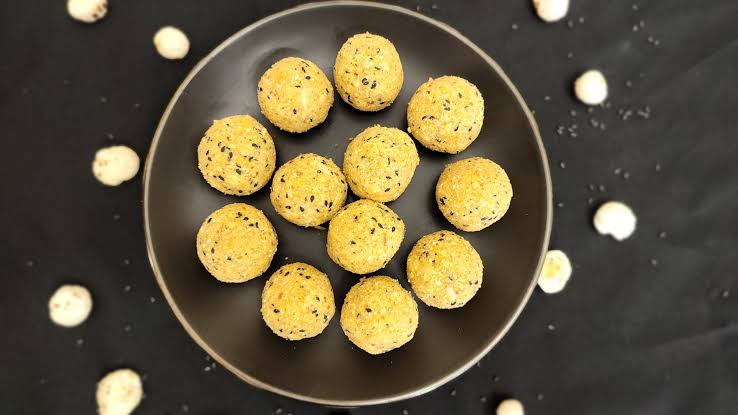
- Makhana Laddu (Roasted Foxnut & Cardamom): A lighter alternative using lotus seeds (makhana). The seeds are roasted in ghee until crisp, coarsely ground, and bound with cashew powder, cardamom, and a splash of condensed milk.
- Churma Laddu (Fried Wheat Dumplings with Jaggery): An iconic Rajasthani and Gujarati sweet. Stiff wheat flour dough is shaped into dumplings, slow-fried in ghee, cooled, and ground into a coarse meal before being tossed with hot melted jaggery, nutmeg, and cardamom.
- Besan-Rava Hybrid Laddu: A middle ground combining chickpea flour and semolina. Both ingredients are roasted separately in pure ghee to match their different cooking times, then combined with powdered sugar, cardamom, and ghee-soaked raisins.
Comparing Key Festive Varieties
| Variety | Primary Base | Sweetener | Texture | Shelf Life (Room Temp) | Skill Level |
|---|---|---|---|---|---|
| Besan | Coarse Gram Flour | Powdered Sugar | Granular, Melt-in-mouth | 3 to 4 Weeks | Medium |
| Motichoor | Fine Gram Flour | Saffron Sugar Syrup | Soft, Delicate, Juicy | 3 to 5 Days | High |
| Coconut | Fresh Grated Coconut | Jaggery / Condensed Milk | Soft, Moist, Tender | 2 to 4 Days | Easy |
| Rava | Semolina | Fine Sugar / Syrup | Crisp, Grainy, Light | 1 to 2 Weeks | Easy to Medium |
| Til-Gul | Toasted Sesame | Soft Jaggery | Chewy, Firm | 4 to 6 Weeks | Medium |
| Dry Fruit | Pitted Dates & Nuts | Natural Date Sugars | Dense, Chewy, Nutty | 4 to 6 Weeks | Easy |
| Churma | Fried Wheat Dough | Melted Jaggery | Rich, Dense, Rustic | 2 to 3 Weeks | High |
Assembling a Balanced Festive Platter
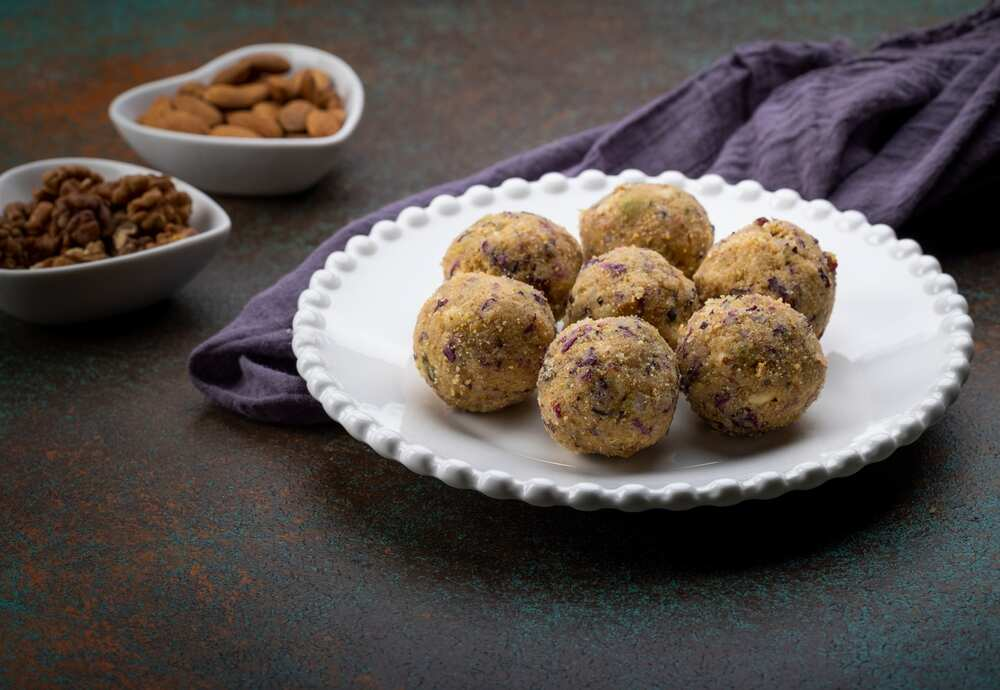
When presenting a sweet platter for guests or as a ritual offering, presenting a variety of textures and colors makes the arrangement feel truly festive.
- Traditional Serveware: Present sweets on brass, bronze (kansa), or silver platters lined with a fresh, washed banana leaf. The leaf prevents ghee from marking the metal and adds a traditional touch.
- Color Contrast: Place contrasting sweets side by side—a bright orange Motichoor laddu beside a snow-white Coconut laddu, anchored by a golden Besan or dark Churma laddu.
- Finishing Touches: Scatter dried rose petals across empty spaces on the platter, garnish select pieces with silver leaf (varq), and place a fresh sprig of Tulsi or Durva grass near the sweet offerings.
Troubleshooting Common Laddu Pitfalls
- If the mixture is too dry to bind: Avoid adding raw cold milk, which shortens shelf life. Instead, trickle in 1–2 tablespoons of warm pure ghee, or place the bowl over a pot of warm water (double boiler) for two minutes to gently soften the fats and sugars.
- If the laddus flatten out on the tray: This happens when there is too much ghee or the mixture was too warm when shaped. Pop the bowl into the refrigerator for 8 to 10 minutes to firm up the ghee, then re-roll into firm spheres.
- If the flour tastes raw or catches in the throat: Rushing the roasting process over high heat browns the outside before the raw starch cooks through. Always roast over a low flame, use a heavy-bottomed pan, and judge doneness by aroma—the flour is ready when a deep, nutty scent fills the kitchen and clear bubbles of ghee pool on top.
Storage Guidelines
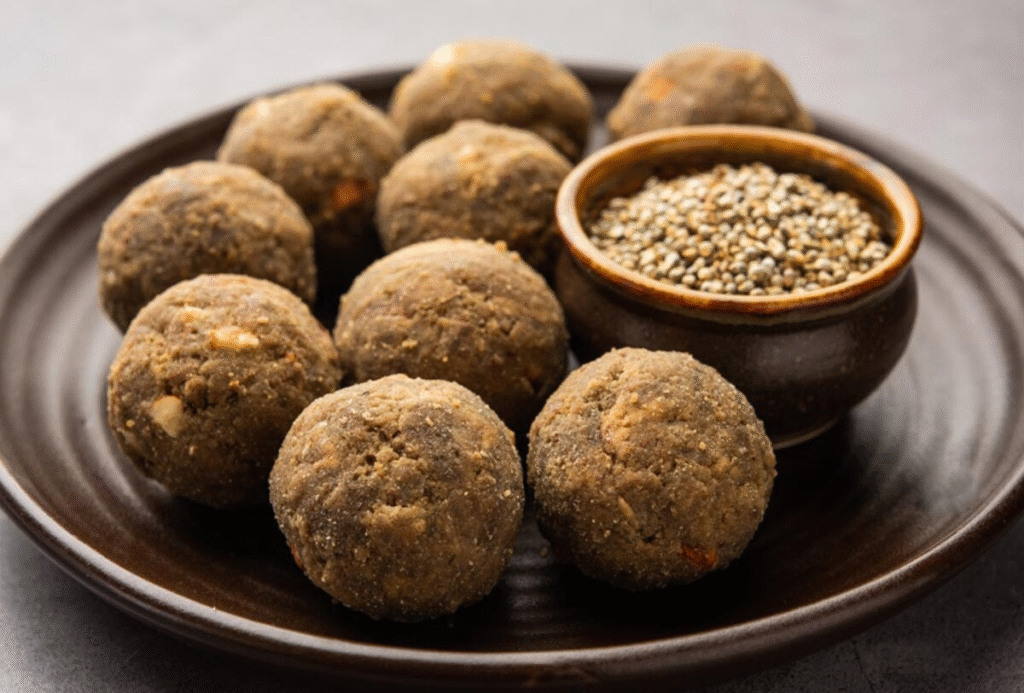
Store ghee-based sweets in clean, dry stainless steel tins or glass jars rather than plastic containers, which can trap stale odors over time. When stacking softer varieties like Motichoor or fresh Coconut, place sheets of parchment paper between layers so they don’t flatten under their own weight.
While dry flour, nut, or seed laddus keep well in a cool pantry at room temperature for several weeks, any variety made with fresh coconut or dairy items (khoya) should be refrigerated and brought to room temperature 20 minutes before serving.
FAQ’S
1. Which laddu is popular for Ganesh Chaturthi?
Besan, motichoor, and coconut laddus are popular choices.
2. What are easy laddus to make at home?
Besan, rava, peanut, and coconut laddus are simple options.
3. Can laddus be prepared in advance?
Yes, most dry laddus can be made ahead and stored properly.
4. Which laddus are good for gifting?
Dry fruit, besan, and assorted laddu boxes are great for gifting.
5. How can I make laddus more festive?
Garnish them with pistachios, almonds, saffron, or coconut.