
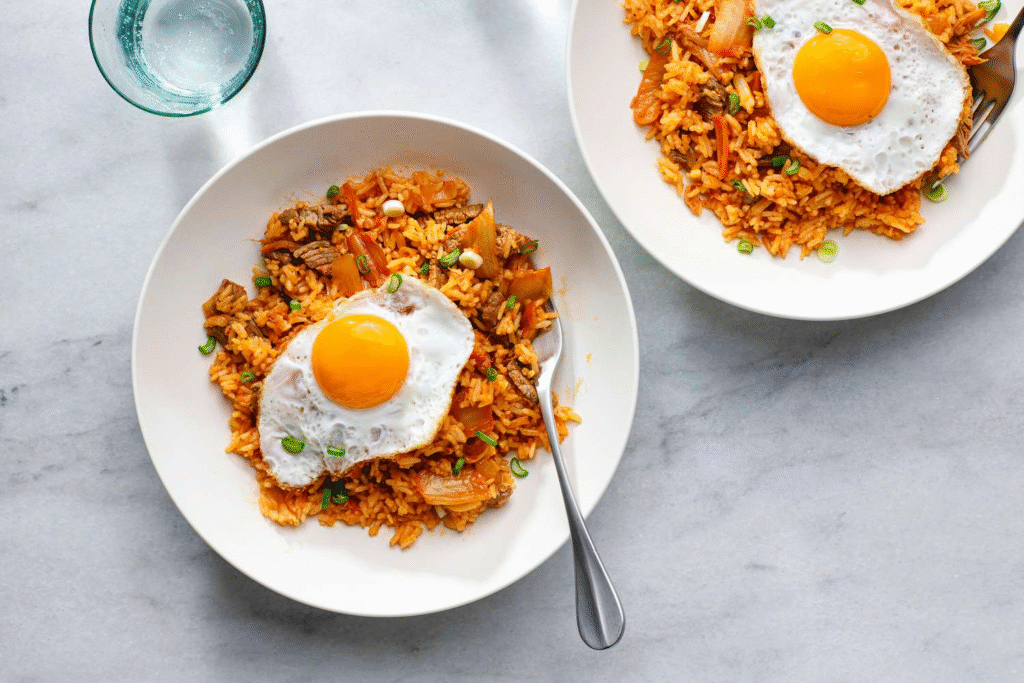
A lot of people say making fried rice is best with leftover rice straight from the Kimchi Fried Rice fridge, or just day-old rice, but I’ve never really tasted the difference in flavor, taste, or texture. I use fresh rice all the time. I just let it cool down a bit before I stir fry, and my kimchi bokkeumbap is always delicious. It’s the best fried rice I have ever tasted, much better than the kimchi-bokkeumbap at a Korean restaurant.
The thing about kimchi fried rice is that it’s technically a poverty meal. Growing up, my mom made it when the fridge was almost empty — leftover rice, older kimchi that had gotten too sour to eat straight, an egg or two. Nothing fancy. The dish exists precisely because ripe, tangy kimchi transforms plain rice into something deeply savory and complex. The sourness mellows when you fry it. The fat from the egg rounds it out.
What is kimchi?
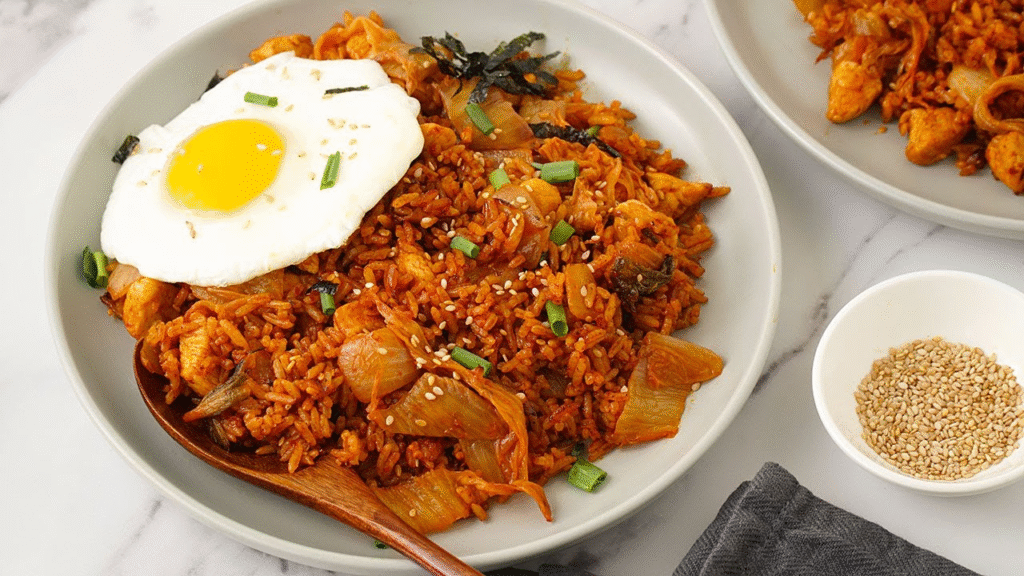
Kimchi is a traditional side dish in Korea made of salted and fermented vegetables. You’ll typically find these in grocery stores with napa cabbage as the key ingredient. Other vegetables such as daikon can be fermented, too! As you can see from my dish, my kimchi is a mix of quartered daikons and napa cabbage.
As with all fermented things, the longer it ferments, the more sour it becomes. This is why I always have kimchi at home because it sits well in the fridge. Kimchi that is been fermented for a longer time is best for kimchi fried rice because the rice balances out the acidity. Fresh kimchi is just as delicious, but hasn’t acquired as unique of flavors. Want to make your own at home? Try my quick and easy kimchi recipe.
Ingredients
| Ingredient | Quantity | Notes |
| Aged/Sour Kimchi | 1 cup | Chopped into small bite-sized pieces (older kimchi works best) |
| Kimchi Juice | 2–3 tbsp | Strained directly from the kimchi jar |
| Day-Old Cold Rice | 2 cups | Medium or short-grain white rice works best |
| Gochujang (Korean chili paste) | 1 tbsp | Adds rich depth, body, and color |
| Soy Sauce | 1 tbsp | For savory umami |
| Sesame Oil | 1 tbsp | Added at the end for aroma |
| Garlic | 2 cloves | Minced |
| Cooking Oil | 1 tbsp | Neutral oil (vegetable, canola, or sunflower) |
| Egg | 1 | Fried sunnyside-up for topping |
| Garnish | To taste | Chopped green onions, toasted sesame seeds, crushed roasted seaweed (gim) |
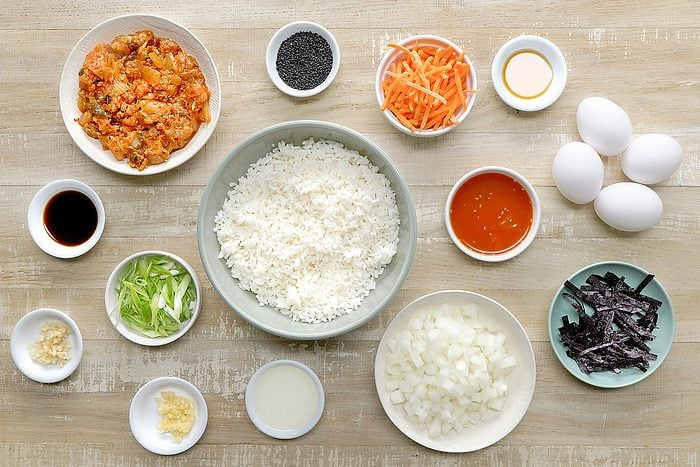
- 3 bowls steamed rice (3 cups)
- 1 cup chopped kimchi (should be aged, well-fermented and sour)
- ¼ cup kimchi juice (spicy red juice from a jar of kimchi)
- ¼ cup water
- 2-3 tablespoons gochujang
- 3 teaspoons toasted sesame oil
- 1 teaspoon vegetable oil
- 1 green onion, chopped
- 1 tablespoon roasted sesame seeds
- 1 sheet of gim, roasted and shredded into seaweed strips
Directions
1. Heat up a wide, flat pan or skillet. Add the vegetable oil.
2. Add the kimchi and stir fry for 1 minute over medium-high heat.
3. Add rice, kimchi juice, water, and gochujang. Stir all the ingredients together for about 7 minutes with a wooden spoon.
4. Add sesame oil and remove from the heat.
5. Garnish with sprinkled chopped green onion, roasted gim, and sesame seeds. Serve right away.
Recipe Notes
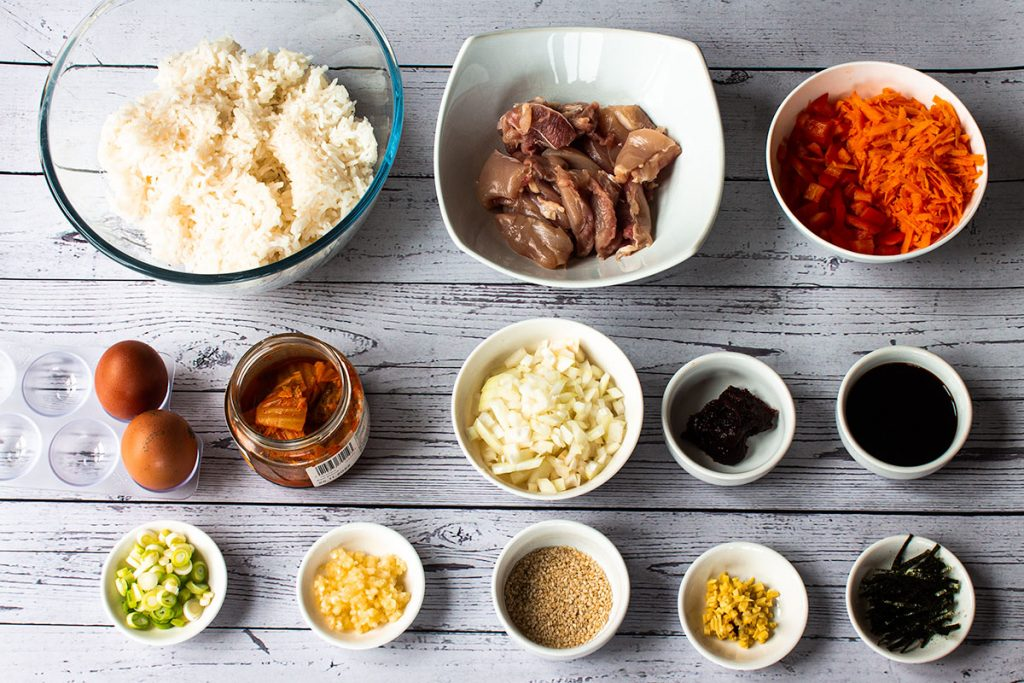
- Use day-old, cold rice to prevent mushiness during stir-frying.
- Ensure the kimchi is spicy and sour for the best flavor.
- Replace soy sauce with tamari or a gluten-free alternative for a GF version.
- Add vegetables like zucchini, peas, or sweet corn for extra nutrition.
- Firm tofu works best; press it beforehand to remove excess water.
- Adjust gochujang to control the spice level.
- Sesame oil should be added at the end for maximum flavor.
- Kimchi juice enhances the overall tanginess; adjust based on preference.
- Garnish with toasted sesame seeds for a nutty crunch.
- Serve immediately for the best texture and flavor.
Best Rice for Kimchi Fried Rice
Kimchi fried rice is a fantastic dish for utilizing leftover rice.
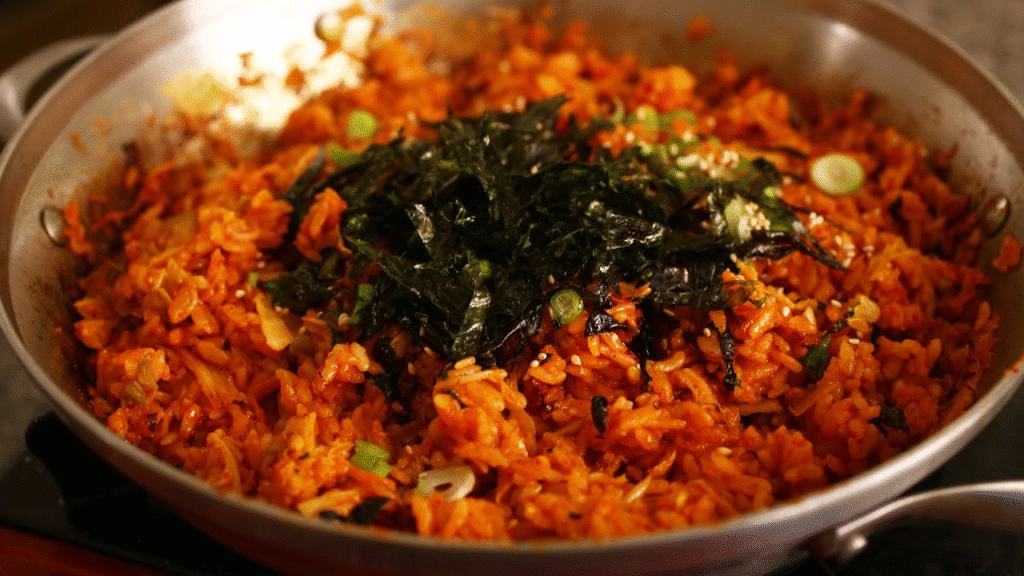
You’ve probably heard that one or two-day-old rice fries better. Let me clarify this concept. Freshly cooked rice tends to be moist and soft, and when stir-fried, it can become gluggy – not an appealing texture for a stir fry dish!
However, if you’re skilled at managing the water content, you can also use freshly cooked rice. Simply prepare the rice to be intentionally drier by adding slightly less water during the rice cooking process.
How to Season Kimchi Fried Rice
The final tip I want to share today revolves around the ideal way to season kimchi fried rice: by using well-fermented kimchi juice (from a kimchi container).
You’ll be amazed to discover that kimchi juice, straight from your kimchi container, serves a unique purpose. It’s packed with flavor – tangy, spicy, and slightly sweet (unless overripe), which adds a significant depth to dishes like fried rice.
Usually, I don’t add anything else to my kimchi fried rice – not even gochujang (Korean chili paste) or gochugaru (Korean chili flakes) – unless I’m running low on kimchi juice or desire an additional spice kick. Of course, you are free to add either of them according to your preference. If you do, they will undoubtedly provide an extra hint of spice!
Pro-Tips for Success
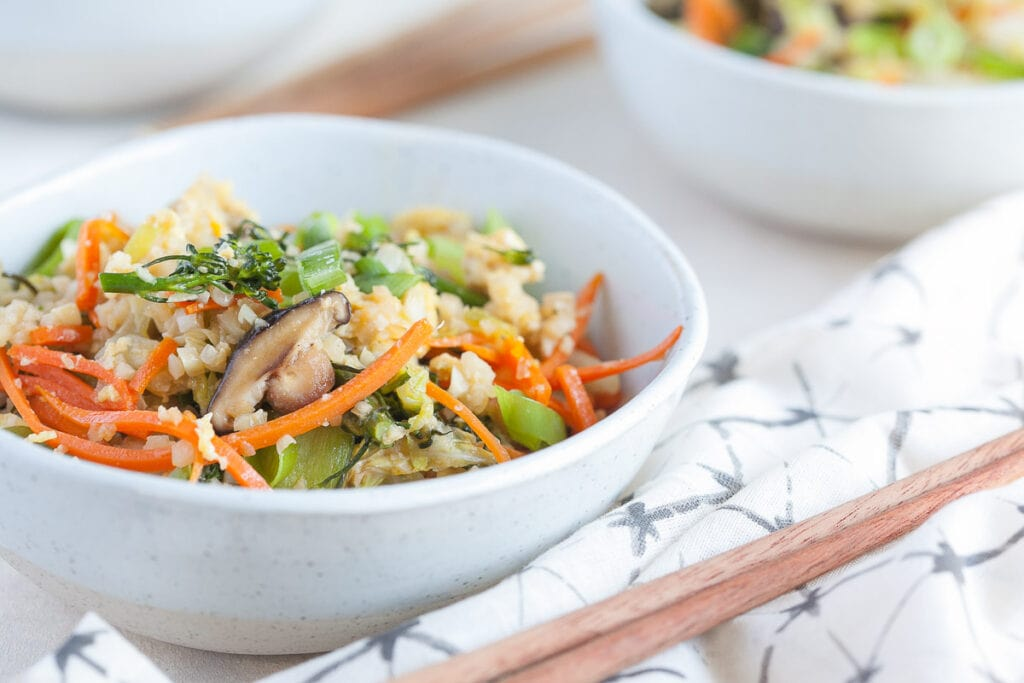
Use Aged Kimchi:
Freshly made kimchi lacks the high acidity required for authentic Kimchi Bokkeumbap. Look for kimchi that is sour, well-fermented, and a bit bubbly in the jar.
Cold Rice is Essential:
Warm, freshly cooked rice releases excess steam when tossed in the pan, turning your fried rice mushy. Cold, day-old rice absorbs the liquids and holds its firm structure.
The Runny Yolk Factor:
Do not overcook your egg! Mixing a rich, runny egg yolk into the hot, tangy rice creates a creamy sauce that balances the spiciness perfectly.
Exploring Exciting and Delicious Recipes Using Kimchi
Kimchi fried rice is a crowd favorite when it comes to using up that matured kimchi in your fridge, standing strong alongside other Korean staples like kimchi jjigae (kimchi stew) and kimchi pancake.
For those who prefer a twist on the “traditional”, check out my tuna kimchi fried rice, which swaps the usual bacon for tuna, introducing an unexpected, yet delightfully satisfying protein source.
If you like something strong and saucy, my kimchi udon recipe is a must-try. Beware though, it’s known to be quite addictive!
And if you’re still hungry for more creative ways to incorporate kimchi into your meals, don’t miss out on my compilation, 14 Delicious Ways to Eat Kimchi!
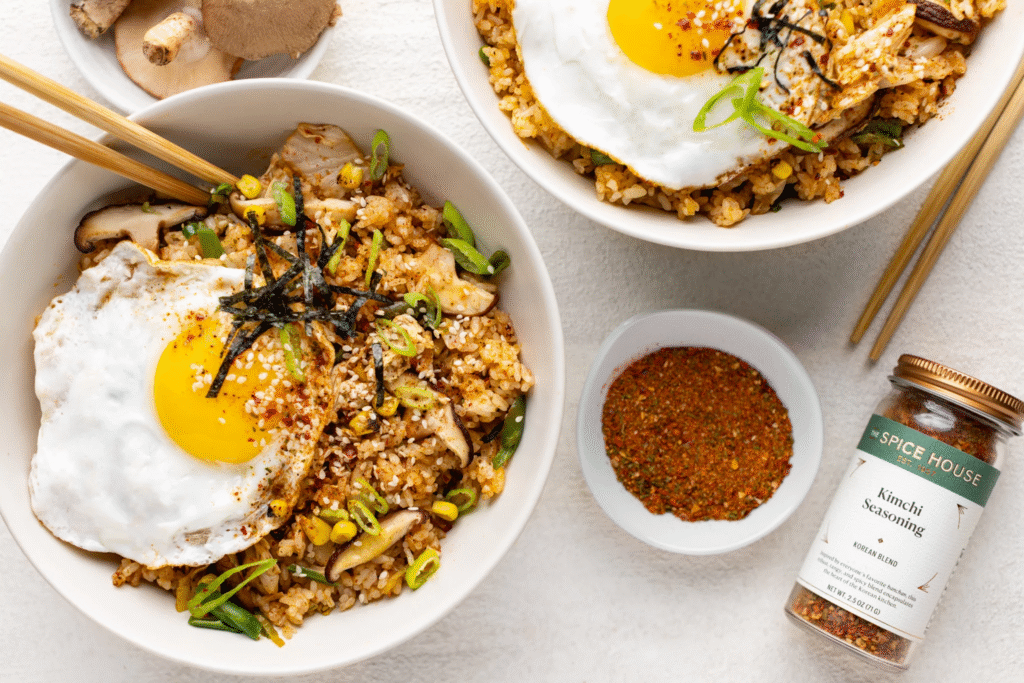
Note
- Ideally the kimchi is at least 2 weeks old. If not, add 1/2 tsp rice vinegar into the kimchi juice to make it sour.
- Obtaining 1/4 cup of kimchi juice can be difficult if your kimchi is fairly new. In that case, use 2 1/2 Tbsp kimchi juice and 1 Tbsp gochujang instead. If you want it to be not spicy, you can add 1 Tbsp soy sauce instead of gochujang.
- 1 Tbsp = 15 ml, 1 Cup = 250 ml
- If you want to learn more about Korean ingredients, check my essential Korean cooking ingredients list!
FAQ’S
1.How long does leftover kimchi fried rice keep, and how do I reheat it?
Stored in an airtight container in the refrigerator, leftover kimchi fried rice keeps well for 3 to 4 days. To reheat, warm it in a skillet over medium heat with a splash of oil or water to restore its texture. Avoid microwave reheating if you want to keep the bottom layer crisp!
2. Is Gochujang (Korean chili paste) essential for this recipe?
While not strictly mandatory, Gochujang adds deep umami, body, and a vivid red color that kimchi juice alone cannot provide. If you do not have Gochujang, you can substitute it with a mixture of 1 tablespoon Gochugaru (Korean chili flakes), ½ teaspoon soy sauce, and a pinch of sugar, or a splash of Sriracha in a pinch.
3.Can I make kimchi fried rice if my kimchi isn’t sour or old enough?
Yes! While well-fermented, sour kimchi is ideal, you can easily mimic that aged flavor with fresh kimchi. Simply stir in ½ teaspoon of rice vinegar or lemon juice alongside ¼ teaspoon of sugar when sautéing your kimchi to instantly boost its acidity and balance the dish.
4.What is the best protein to add to kimchi fried rice?
Spam, bacon, and pork belly are classic pairings because their rich, savory fat cuts through the spicy tanginess of the kimchi. Canned tuna, ground chicken, beef, or pan-seared tofu are also popular options. Cook raw meats in the pan before adding the garlic and kimchi so the dish absorbs all the rendered rendered fat.
5.Why is my kimchi fried rice mushy, and how can I fix it?
A: Mushy rice is usually caused by using freshly cooked, warm rice or adding too much liquid. Fresh rice contains excess moisture that turns into steam in the pan. Always use cold, day-old rice from the fridge, as the drier grains readily absorb the sauce while keeping their structure. If using fresh rice, spread it out on a baking sheet and pop it in the freezer for 15 minutes before cooking.