
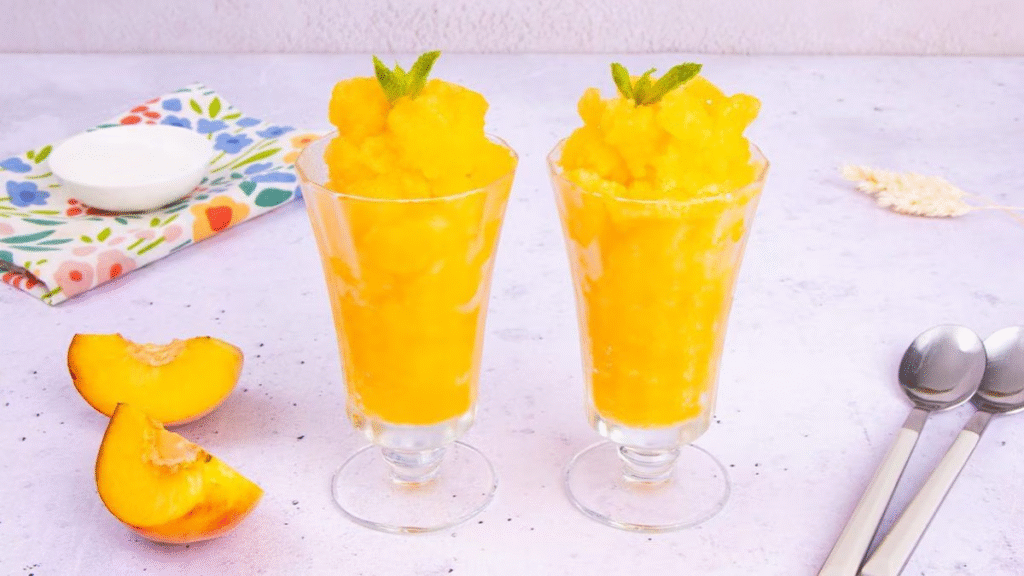
There’s something magical about that first spoonful of granita on a sweltering summer day. This isn’t just any frozen dessert – it’s Italy’s answer to beating the heat with pure, unadulterated flavor. Unlike its fancy cousin sorbet, granita doesn’t require expensive equipment or complicated techniques. All you need is a fork, some patience, and a craving for something extraordinary.
I fell in love with granita during a trip to Sicily, where street vendors serve it alongside warm brioche for breakfast. The contrast of textures – those delicate ice crystals melting on your tongue – transported me to coastal Italian mornings. What makes this best granita recipe so special is its simplicity. You’re not masking flavors with heavy creams or artificial additives. Instead, you’re celebrating the pure essence of whatever fruit or flavor you choose.
What is a granita?
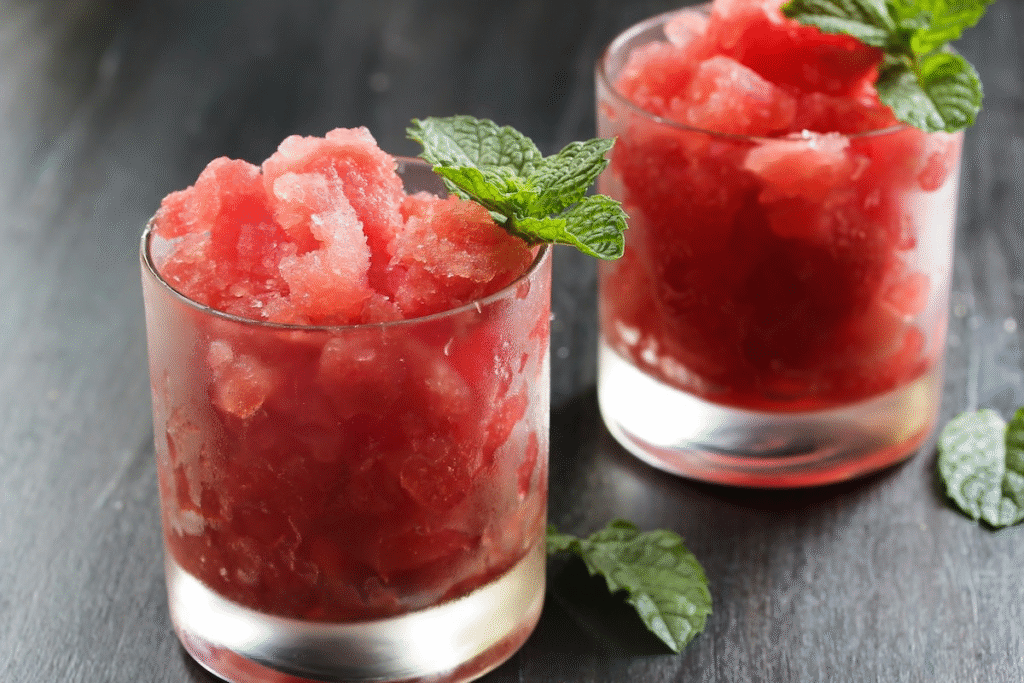
Italy is well known for gelato and sorbetto (sorbet), but in Sicily, the local favorite frozen treat is granita. Just as gelato is a little different from the more custard-style ice cream, granita is a little different from sorbet as well.
Granita is a water-based frozen treat that is traditionally Sicilian but can be found in other parts of Italy these days as well. It can be made in a few different ways and so is sometimes more slushy-like, while other times the pieces of ice are a little larger and more like shaved ice.
Unlike shaved ice, though, the flavor is mixed through the base (rather than being a syrup added to the ice at the end), and the flavors are always (at least traditionally) completely natural.
Different areas of Sicily are known for different flavors and the texture differences are also generally associated with different regions. Some flavors are seasonal as well, such as using fig, wild strawberries or mulberries.
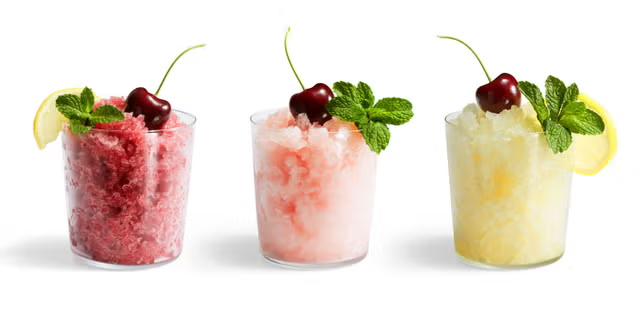
Some of the most popular flavors use local fruits. Citrus fruits are a popular crop on the island, and they are also wonderfully refreshing, so ideal for a cold treat.
Other flavors are nut-based such as pistachio, another local crop. It may not seem as obviously refreshing, but it does also work well.
Why You’ll Love This Recipe
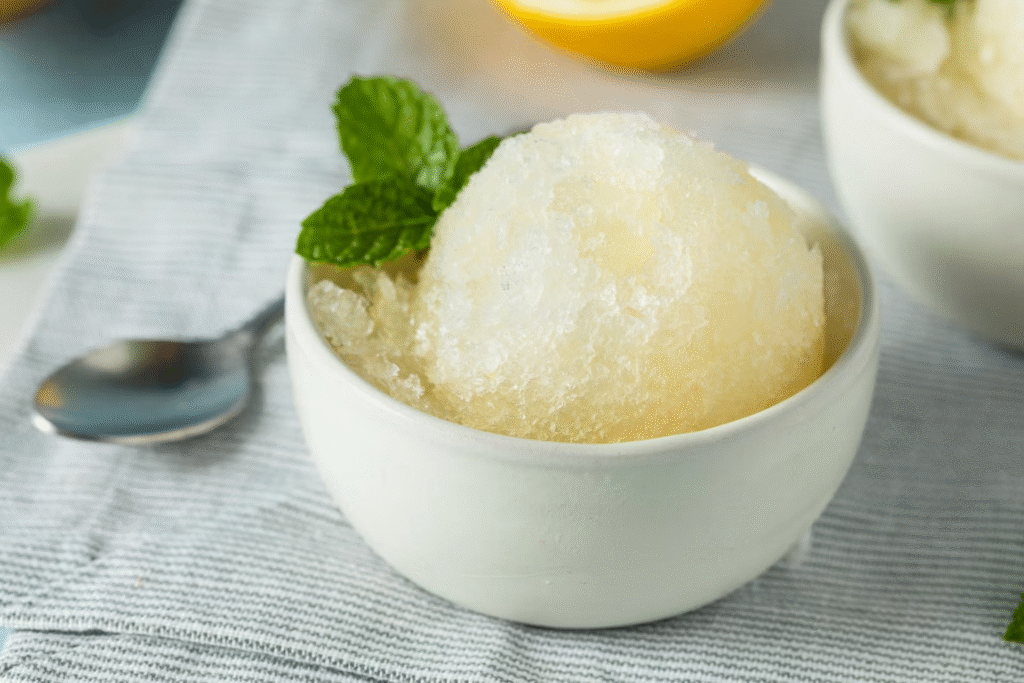
The beauty of this simple granita meal lies in its minimal ingredient list, but each component plays a crucial role in the final texture and taste.
Sugar forms the backbone of your granita’s texture. Regular granulated sugar works perfectly, but you can substitute with honey (use 3/4 the amount) or agave for different flavor profiles. The sugar prevents the mixture from freezing solid, creating those coveted ice crystals instead of a rock-hard block.
Water quality matters more than you might think. If your tap water tastes off, your granita will too. Use filtered water when possible, especially for delicate flavors like lemon or cucumber.
Fresh lemon juice provides the starring flavor in our base recipe. Always use fresh-squeezed – bottled juice lacks the bright, vibrant taste that makes granita special. For other citrus varieties, the ratio stays the same, but taste as you go since sweetness levels vary.
Fresh thyme adds an unexpected herbal note that elevates this from simple to sophisticated. Don’t have thyme? Try rosemary, mint, or even basil. For fruit-focused versions, skip herbs entirely or complement with vanilla extract.
How to Make It
Creating the perfect granita is about understanding the process rather than following rigid rules. This quick granita recipe starts with dissolving sugar completely – any undissolved crystals will create unpleasant grittiness later.
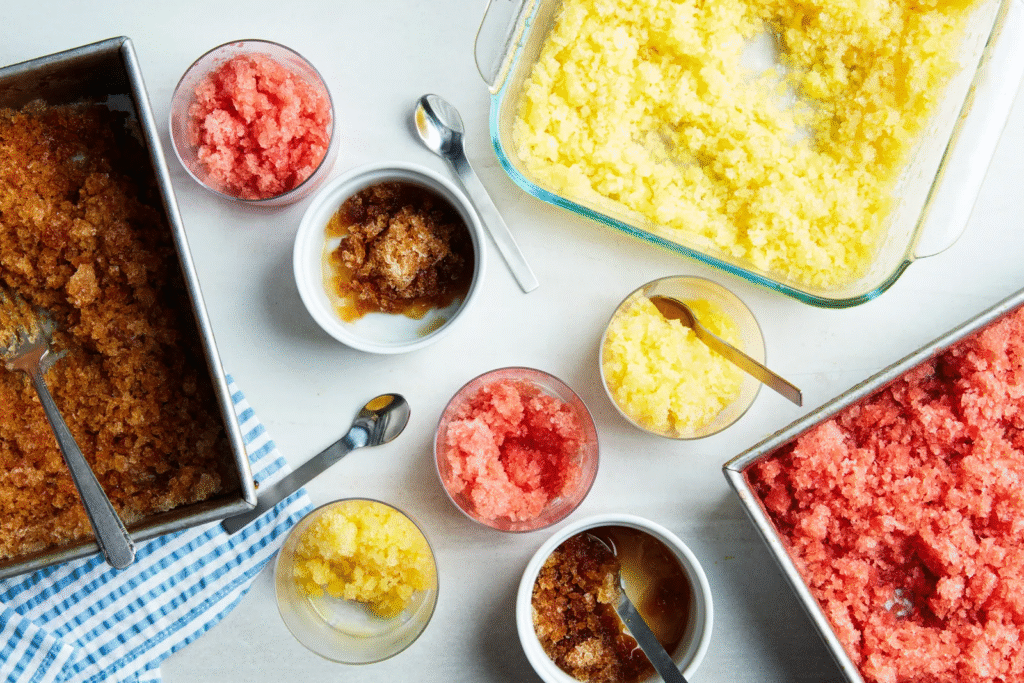
The key to achieving that signature texture lies in the scraping technique. During those first two hours, you’re essentially training the ice crystals to form in small, delicate flakes rather than large chunks. Think of it as gentle coaxing rather than aggressive stirring. When you scrape with your fork, use smooth, sweeping motions across the entire surface.
Temperature control is your friend here. If your mixture freezes too quickly, you’ll end up with solid ice. If it’s too warm, it won’t set properly. The sweet spot is that slushy consistency where your fork easily breaks through but the mixture holds its shape.
Don’t panic if you forget to scrape and find a solid block in your freezer. Simply let it thaw for 10-15 minutes until you can break it up, then continue the process. This healthy granita version is forgiving and always recoverable.
How to Freeze Granita
No special tools needed to make granita!
You can use any freezer safe dish for granita. I used a metal bread loaf pan because it fits nicely in my freezer. You can use casserole dishes, baking pans, or pie tins.
Just remember, the larger the surface area and shallower the pan, the quicker the granita will freezer. Since I used a loaf pan, it took a little bit longer for the granita to set up.
Pour the liquid into your desired dish and place it in the freezer. Check on the mixture every 30 minutes. Each time, remove the dish from the freezer and scrape up any icy bits have begun to form.
After about an hour, the mixture will look creamy like a sorbet. After about 90 minutes, it should more like shaved ice.
That’s it! In about 2 hours, you’ll have this delicious and refreshing strawberry basil granita.
If you’re in the festive mood, go ahead a pop a bottle of Prosecco or any sparkling wine. Top off a glass full of this granita for one delicious mimosa or bellini!
How do you serve a granita?
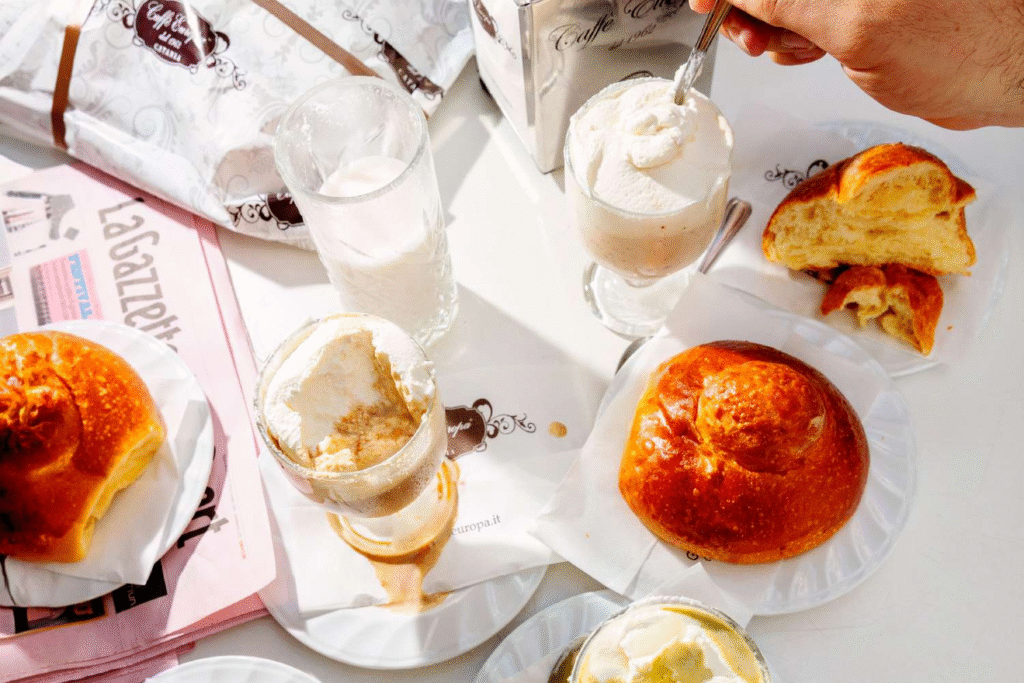
While for some people, frozen treats are a dessert, that is typically not the case in Sicily. There, granitas tend to be either served as a snack or for breakfast.
The Sicilian brioche is similar to the French style egg-enriched bread but with added orange and lemon zest.
It is also always smaller individual rolls with a small “tuppo” or “top” – a kind of ball sticking on top of the main roll.
The granita itself is nearly always served in a clear glass and depending on how liquidy it is, might be served with a spoon and/or a straw.
Particularly when served for breakfast, when coffee granita is a favorite, they are commonly served with a small brioche roll on the side.
How do I make watermelon granita?
You will need:
- 4 cups of seedless watermelon, cubed
- 4 tablespoons of sugar (can be adjusted to taste)
- 2 tablespoons of lime juice
Equipment:
- blender or food processor
- freezer-safe glass or metal pan
This recipe makes about 4 servings. It can easily be doubled or tripled!
Method:
1. Add all ingredients to a blender or food processor and blend until smooth. Make sure there are no chunks of watermelon remaining.
2. Pour the mixture into a freezer-safe pan (glass or metal work well). Then, place it in the freezer for one hour.
3. Remove the pan from the freezer. Using a spoon or a fork, gently stir the ice crystals that have formed, dislodging them from the edges and breaking up any large chunks. Return the pan to the freezer for another hour.
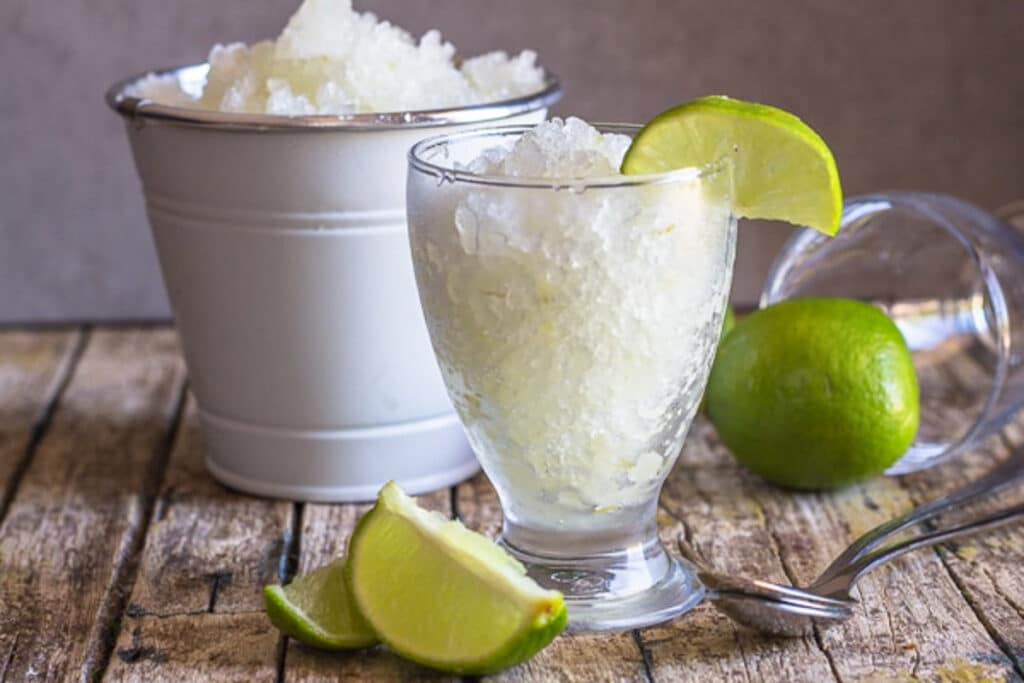
Remove the pan, and scrape down the ice. This ice will start to become thicker and chunkier, so be sure to break down all of the chunks. Return the pan to the freezer for one more hour.
Return to the freezer for one more hour. Then, remove the pan and scrape the ice again. This time, use a fork to scrape the ice into small pieces, almost like you’re “shredding” the ice. The ice should be fluffy, with a snow cone like consistency.
Scoop some out into a bowl and serve immediately. Enjoy!