
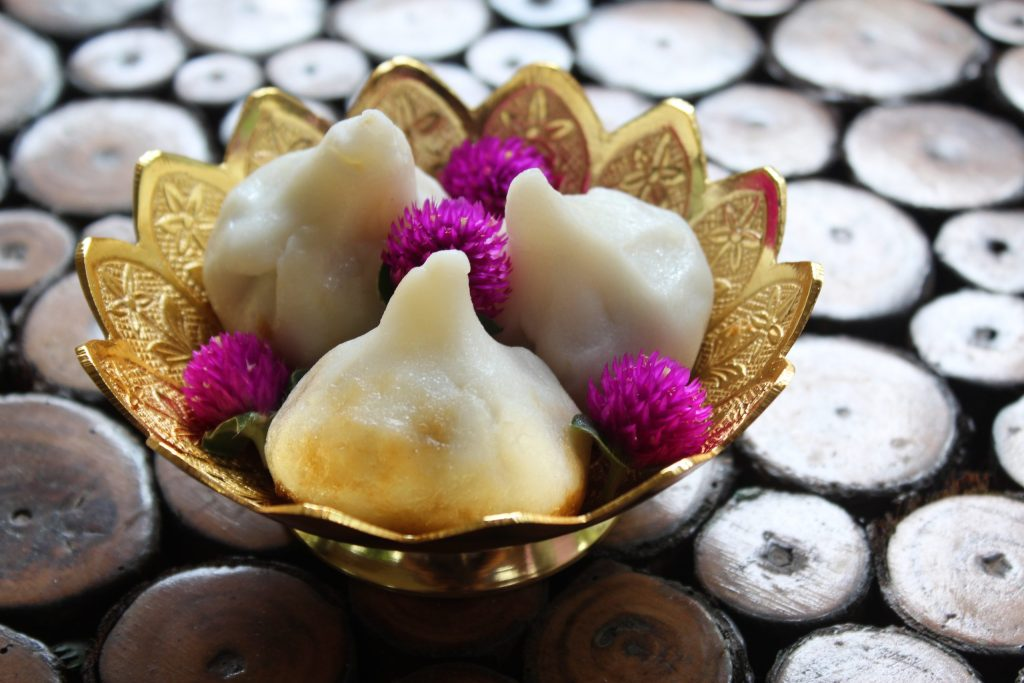
When Ganesh Chaturthi arrives, the atmosphere at home feels different. The kitchen becomes busy, the smell of ghee, coconut, cardamom, and jaggery fills the air, and everyone starts looking forward to one special sweet — modak.
For many Indian families, modak is not simply a dessert. It has a special place in Ganesh Chaturthi celebrations and is traditionally prepared as an offering to Lord Ganesha. The classic modak has a soft outer covering with a sweet coconut and jaggery filling, but today there are many creative versions to enjoy.
From traditional Ukadiche Modak and crispy Fried Modak to Chocolate, Dry Fruit, Mawa, Pista, Kesar, Coconut, Besan, and Instant Modak, you have plenty of choices.
The good news is that making modak at home does not always have to be complicated. Some varieties need a little patience, especially when you are shaping them by hand, while others can be prepared quickly with a simple mold. Whether you are making modak for the first time or want to try something different this Ganesh Chaturthi, there is a recipe for you.
What Is Modak?
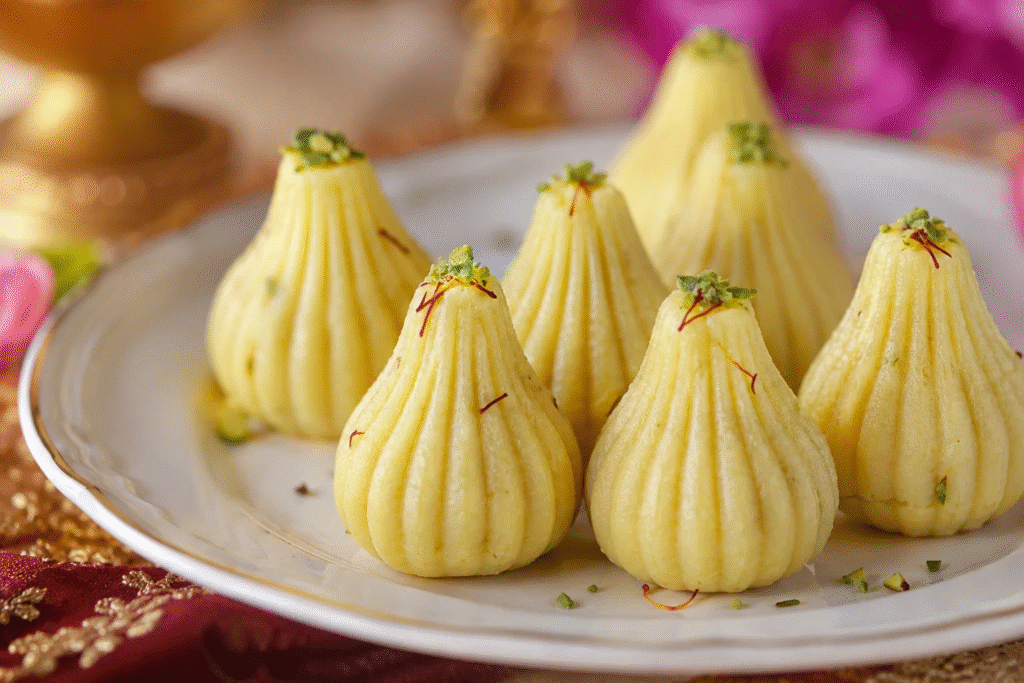
Modak is a traditional Indian sweet closely associated with Lord Ganesha and Ganesh Chaturthi. During the festival, families prepare modaks at home and offer them during prayers before sharing them with family and friends.
A traditional modak has two main parts: the outer covering and the sweet filling.
For Ukadiche Modak, the outer layer is usually made with rice flour. The filling is made from freshly grated coconut and jaggery, with cardamom often added for extra fragrance.
The shape is another thing that makes modak instantly recognizable. It usually has a rounded base with several small pleats meeting at the top. Making those pleats by hand can take a little practice, but a modak mold makes the job much easier.
Over the years, people have experimented with different flavors and ingredients. Today, you can make modaks using chocolate, dry fruits, pistachios, saffron, coconut, mawa, besan, and more.
1. Ukadiche Modak
If you want the traditional Ganesh Chaturthi experience, Ukadiche Modak is the perfect place to start.
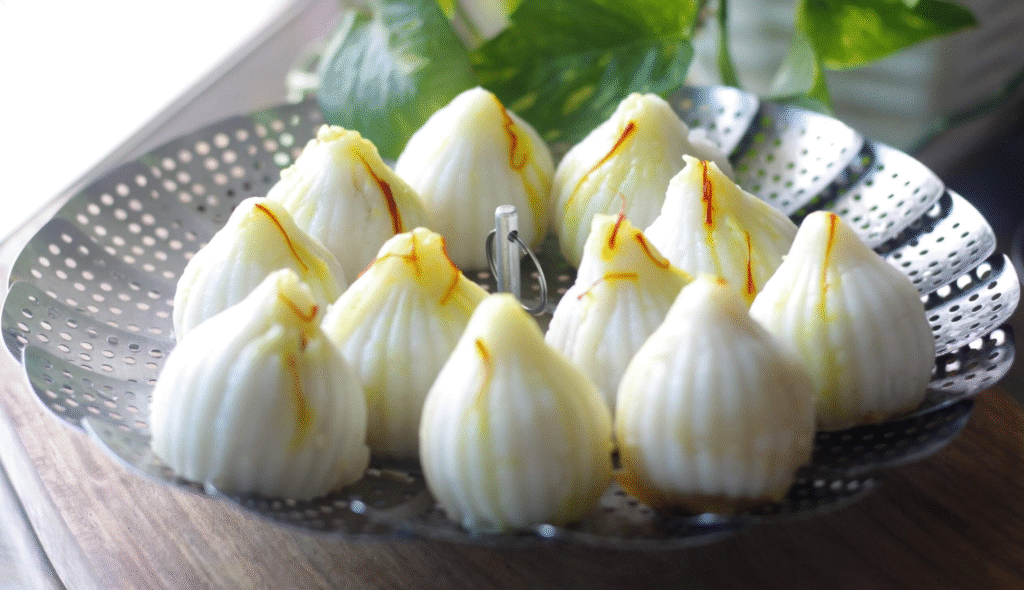
Unlike fried varieties, Ukadiche Modak is steamed. The soft rice-flour covering surrounds a sweet filling made mainly with coconut and jaggery.
Ingredients
For the outer covering:
- Rice flour
- Water
- A little ghee
- A pinch of salt
For the filling:
- Freshly grated coconut
- Jaggery
- Cardamom powder
- Chopped nuts, optional
How to Make It
Begin by preparing the filling. Add grated coconut and jaggery to a pan and cook the mixture over low to medium heat. Stir until the jaggery melts and combines well with the coconut. Add cardamom powder and allow the filling to cool.
Next, prepare the outer covering. Bring water to a boil with a little ghee and salt. Slowly add the rice flour while mixing carefully. Cover the mixture for a few minutes, then knead it while it is still warm enough to handle.
The dough should be soft and smooth. This step is important because a dry dough can crack when you try to shape the modak.
Take a small portion of dough and flatten it into a thin circle. Place some filling in the center and gently create pleats around the edges. Bring the pleats together at the top and seal the modak.
Place the prepared modaks in a steamer and cook them until the outer layer becomes soft and slightly glossy.
The result is a delicate steamed sweet with a warm, fragrant coconut-jaggery center.
2. Fried Modak
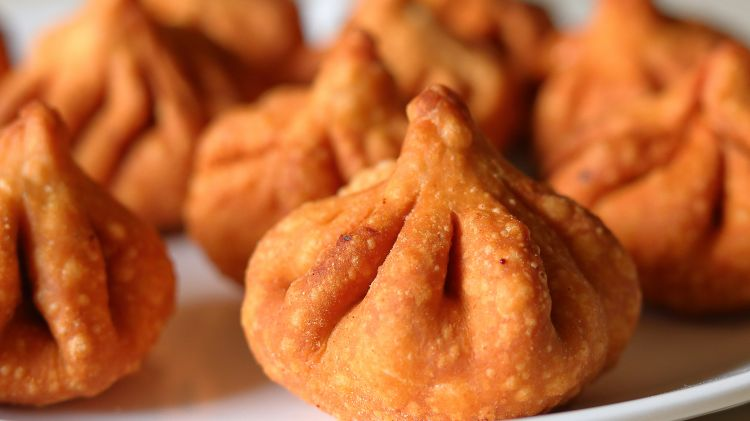
If you prefer crispy sweets, Fried Modak is a delicious alternative to the steamed version.
Fried modaks have the familiar shape of traditional modak but are cooked in hot oil until the outer layer becomes golden and crunchy.
The filling can be similar to the classic coconut and jaggery mixture. Depending on the recipe, the outer covering can be prepared using wheat flour, refined flour, semolina, or a combination of ingredients.
What makes fried modak special is the contrast in texture. The outside is crisp, while the sweet filling inside remains soft and flavorful.
This variety can also be useful when you are preparing sweets for a larger gathering because fried modaks can generally be made ahead of time and stored properly.
3. Chocolate Modak
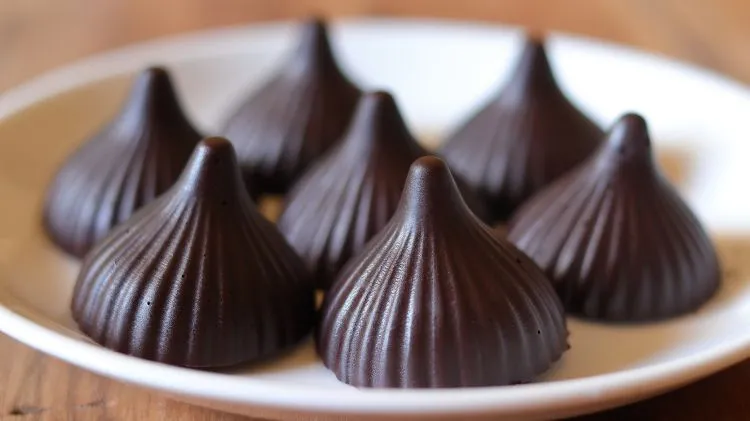
Chocolate Modak is a modern twist on a traditional festive sweet.
It keeps the classic modak shape but introduces a rich chocolate flavor, making it especially popular with children and chocolate lovers.
Depending on the recipe, you can use chocolate, cocoa powder, condensed milk, milk powder, nuts, or even biscuit crumbs.
A simple method is to prepare a thick chocolate mixture and let it cool slightly. Once it reaches a workable consistency, press the mixture into a modak mold.
After the modaks have set, you can decorate them with chopped nuts or a small amount of melted chocolate.
They may look traditional from the outside, but the chocolate flavor makes them completely different from the classic version.
4. Dry Fruit Modak
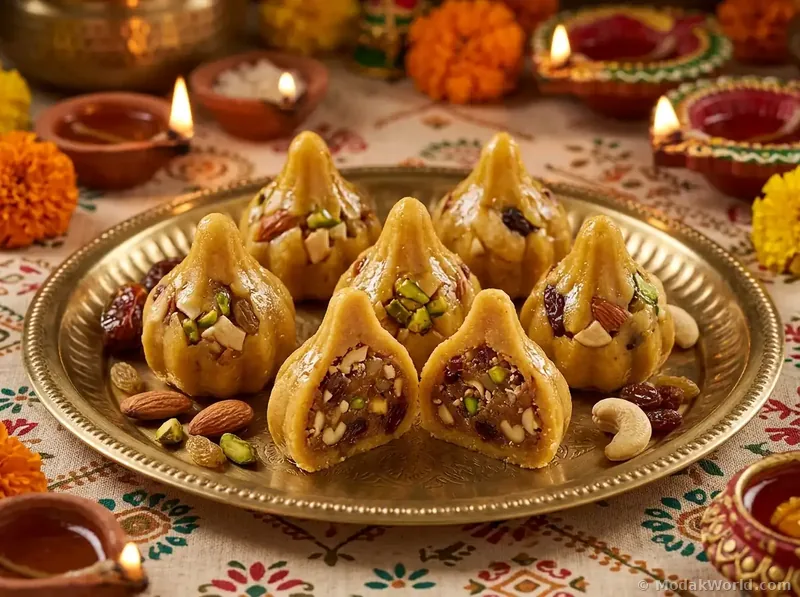
For anyone who enjoys nuts and rich flavors, Dry Fruit Modak is an excellent choice.
You can use almonds, cashews, pistachios, dates, figs, raisins, or a combination of your favorite dry fruits.
The nuts are usually lightly roasted and ground before being mixed with dates or another ingredient that helps hold everything together.
The finished modaks have a rich, nutty flavor and a slightly chewy texture. A topping of chopped almonds or pistachios can make them look even more festive.
Another advantage is that this version does not require traditional rice-flour dough. That makes dry fruit modak a convenient option when you want something festive but do not want to spend too much time shaping dough.
5. Mawa Modak
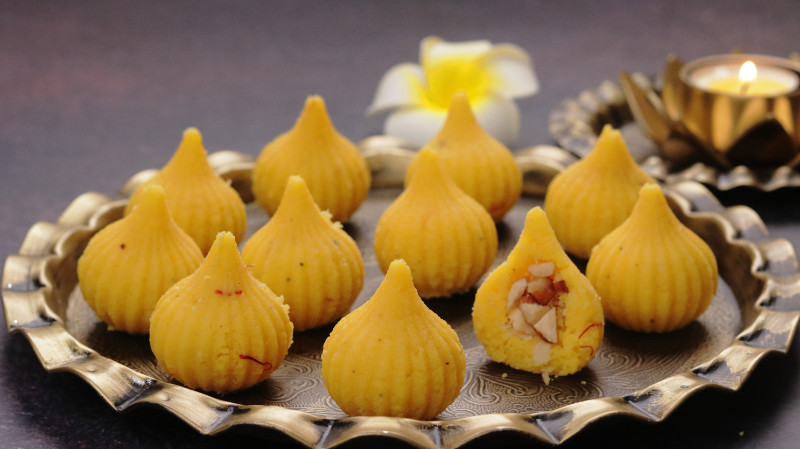
If creamy and rich Indian sweets are your favorite, Mawa Modak is definitely worth trying.
Mawa, also known as khoya, gives these modaks their soft, creamy, milk-based texture.
To prepare them, mawa is gently cooked with sugar until the mixture becomes thick. Cardamom powder can be added for aroma, while chopped almonds or pistachios add a little texture.
Once the mixture has cooled enough to handle, place it into a modak mold and shape it.
Mawa modaks have a rich and festive taste, while being relatively simple to shape because they do not require the same type of dough used for steamed modaks.
6. Coconut Modak
Coconut is already an important ingredient in traditional modak, but Coconut Modak puts it right at the center of the recipe.
This version can be made using grated coconut along with condensed milk, milk powder, sugar, or jaggery.
Cook the mixture until it becomes thick enough to hold its shape. Let it cool slightly before pressing it into modak molds.
Cardamom adds a lovely fragrance. For a more festive touch, you can add saffron, chopped nuts, or even a little rose flavor.
The result is a soft and aromatic sweet with plenty of coconut flavor.
7. Kesar Modak
Kesar Modak is a beautiful choice when you want something that looks and feels extra special.
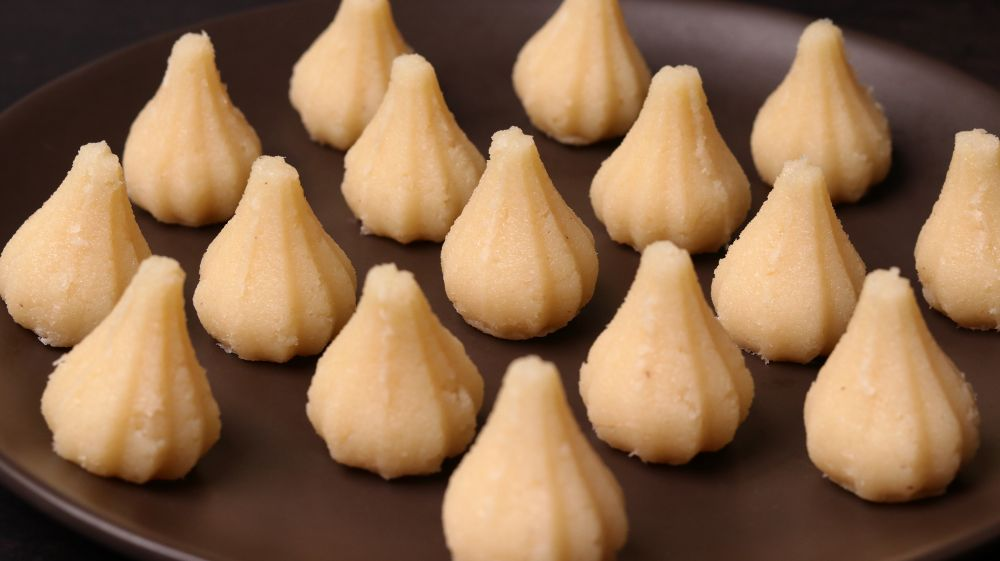
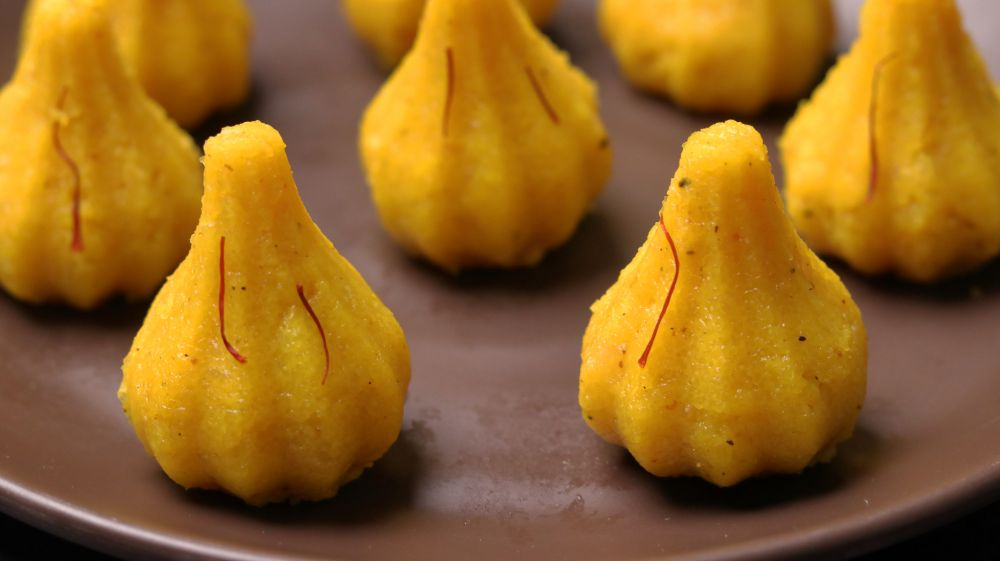
Kesar, or saffron, adds a delicate aroma and a warm golden color. It works particularly well in milk-based or mawa-based modaks.
To get the best flavor from saffron, soak a few strands in warm milk before adding them to the mixture. This helps release both the color and fragrance.
Once the modaks are shaped, you can finish them with chopped pistachios or almonds.
Kesar modaks are especially attractive on a festive dessert platter and add an elegant touch to the celebration.
The Anatomy of a Classic Modak
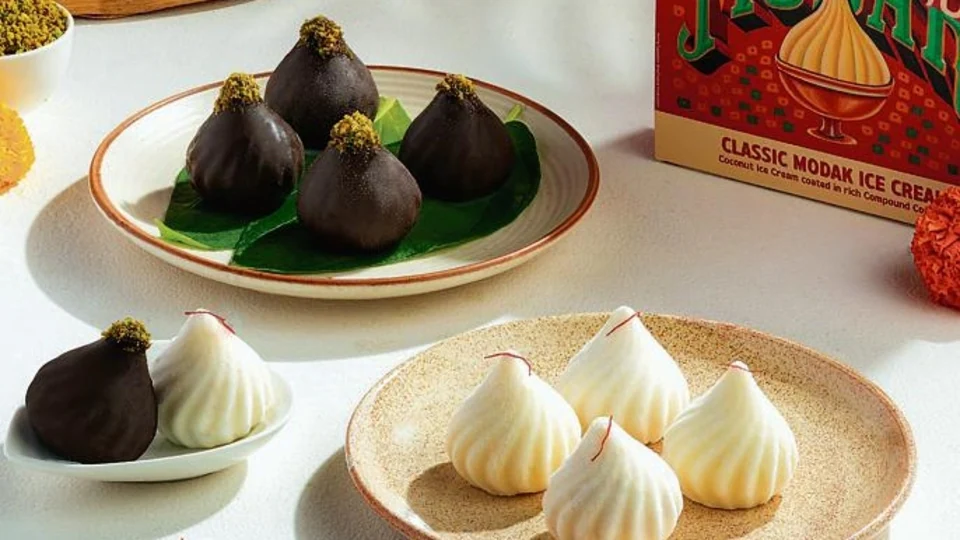
A traditional modak consists of two distinct parts: a tender outer casing and a rich, sweet center.
While purists take pride in hand-pinching perfect pleats (kalis), modern modak molds have made shaping stress-free, allowing even first-timers to craft stunning offerings.
How to Store Homemade Modak
Storage depends on the type of modak you make.
Fresh steamed modaks are usually best enjoyed soon after preparation. If you need to save them for later, place them in an airtight container and refrigerate them. You can gently warm them before serving.
Fried and dry varieties generally stay fresh for longer when stored correctly in an airtight container.
For milk-based varieties such as mawa modak, refrigeration is especially important because they contain dairy ingredients.
Before storing freshly prepared modaks, allow them to cool appropriately. Sealing very hot sweets inside a container can create excess moisture and change their texture.
Navratri Special Food Best Vrat Recipes, Meals & Fasting Ideas
Navratri has a special way of bringing people together. Homes feel more festive, prayers become…

Best Drishyam 3 The Conclusion Release Date, Cast & Latest Updates
The wait for the next chapter of one of Bollywood’s most talked-about crime thrillers is…

Travel Trends 2026: Best Destinations, Tips & Experiences
The magic of travel rarely happens when you are rushing through a packed checklist to…
Best Food Ideas 2026: Easy Recipes, Trends & Delicious Dishes
Food has a funny way of making an ordinary day better. A warm bowl of…